
Baking Blog
Baking recipes, technique, and inspiration
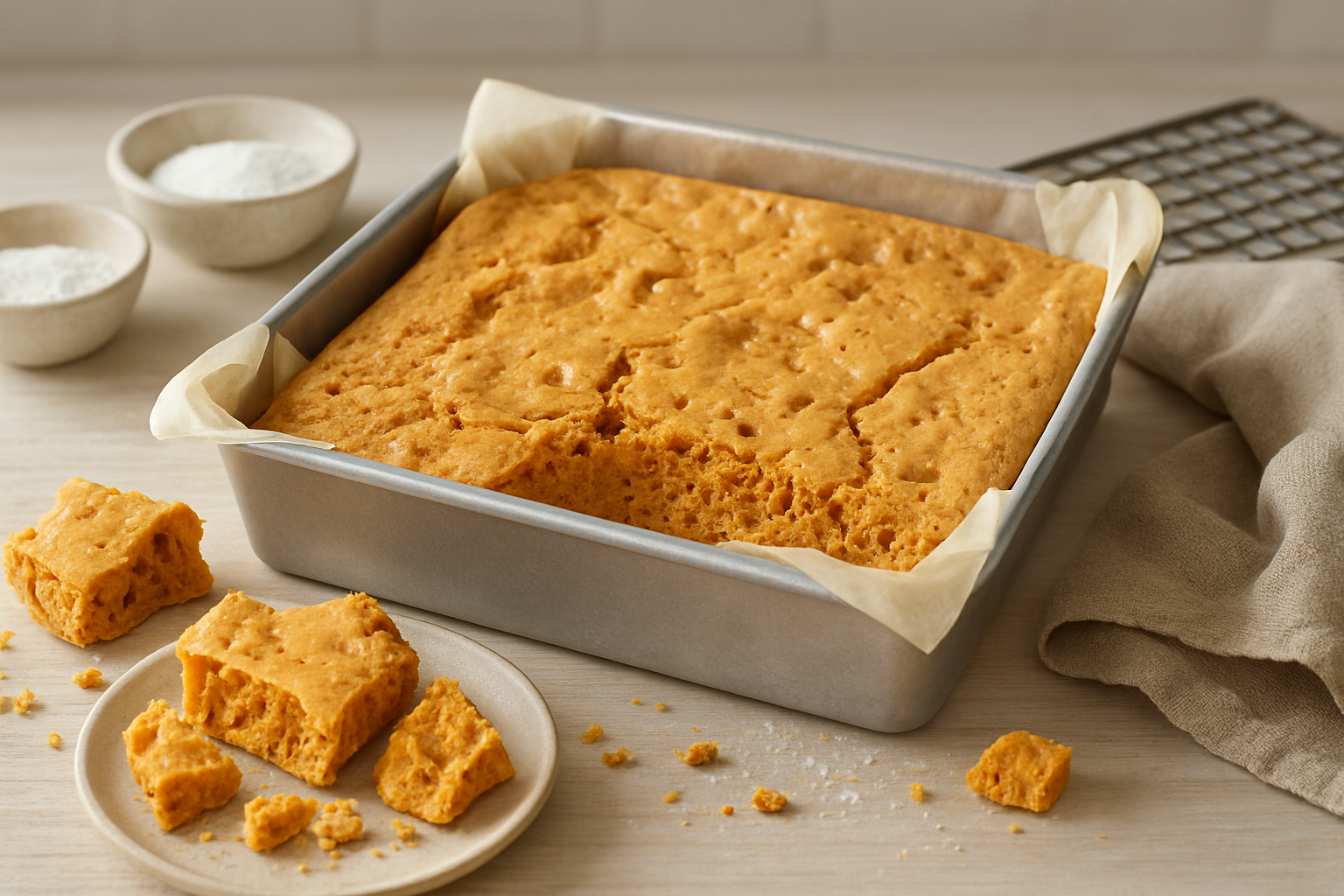
Classic Sponge Toffee Candy Recipe for Light, Crunchy Treats
🛒 Ingredients
- ✓
3/4 cup light corn syrup
- ✓
1 1/4 cups granulated sugar
- ✓
4 tsp baking soda (fresh preferred)
📊 Nutritional Information
📌 Overview
Classic sponge toffee candy is a light, crunchy treat made by combining sugar syrup with baking soda to create a bubbly caramel delight. This nostalgic candy is perfect for homemade snacking or dipping in chocolate. Ideal for festive occasions or anytime you want a sweet, airy crunch.
👨🍳 Preparation
- 1
Line an 8-inch square baking pan with parchment paper. Place paper towels underneath the pan to catch any overflow.
- 2
Attach a candy thermometer to a heavy-bottomed saucepan. Combine the corn syrup and granulated sugar in the pan, stirring gently just to mix.
- 3
Heat the mixture over medium heat without stirring. You can gently swirl the pan occasionally, but avoid stirring to prevent crystallization.
- 4
Bring the syrup to a boil and continue cooking until the thermometer reads 300°F (hard crack stage).
- 5
Remove the pan from heat immediately. Sift the baking soda evenly over the hot syrup and whisk vigorously for 4 to 5 seconds. The mixture will foam and expand rapidly—work quickly!
- 6
Pour the foamy mixture into the prepared pan, scraping the saucepan with a spatula to get every bit out.
- 7
Let the toffee cool completely at room temperature for at least 2 hours without disturbing the pan.
- 8
Once set, lift the toffee out using the parchment paper and break it into pieces with a knife or mallet.
- 9
Optional: Dip pieces in melted chocolate or use crumbs to garnish desserts.
- 10
Store in an airtight container at room temperature for up to 2 weeks.
🧠 Why It Works
This classic sponge toffee candy relies on the precise balance of sugar, corn syrup, and fresh baking soda to create its signature airy texture. Heating the sugar syrup to the hard crack stage (300°F) ensures a firm, crisp structure, while the baking soda triggers a rapid chemical reaction producing carbon dioxide bubbles that expand the toffee into a light, sponge-like crumb. The corn syrup prevents crystallization, keeping the texture smooth and glossy. Proper timing when whisking in baking soda is crucial to avoid deflation, and using fresh baking soda maximizes the foaming effect. This interplay of ingredients and temperature control results in a crunchy, melt-in-your-mouth caramel treat.
🛠️ Troubleshooting
Why is my sponge toffee dense instead of light and airy?
Dense sponge toffee usually results from insufficient baking soda reaction or using old baking soda. Ensure your baking soda is fresh and whisk it vigorously into the hot syrup immediately after removing from heat to trap air bubbles.
What causes my toffee to become sticky or soft after storage?
Exposure to moisture or storing in a non-airtight container causes sponge toffee to absorb humidity, making it sticky and soft. Store in a sealed container at room temperature away from humid environments.
Can I substitute baking soda with baking powder?
No, baking powder contains additional acidic ingredients and won’t produce the same foaming reaction needed for sponge toffee’s airy texture. Stick to fresh baking soda for best results.
How do I fix underbaked toffee that’s too soft?
If the syrup hasn’t reached the hard crack stage (300°F), the toffee will be soft. Use a reliable candy thermometer and cook the syrup until it hits the correct temperature before adding baking soda.
What’s the best way to reheat or soften sponge toffee if it’s too hard?
Sponge toffee is best enjoyed crisp and is not suited for reheating. If it’s too hard, allow it to sit at room temperature to slightly mellow, but avoid heating which can cause melting or stickiness.
💡 Tips and Variations
- •
Rich version: Add a tablespoon of butter to the syrup before boiling for a deeper caramel flavor.
- •
Technical baking tip: Use a candy thermometer to ensure you reach the precise hard crack temperature for perfect texture.
- •
Dominant element: The baking soda reaction is key to the airy, sponge-like structure.
- •
Alternative version: Coat the cooled toffee pieces in melted dark chocolate for a decadent treat.
- •
Structural substitution: You can swap light corn syrup with golden syrup if available for a slightly different flavor.
- •
Secret ingredient/trick: Make sure your baking soda is fresh to maximize the foaming reaction.
- •
Quick dietary variation: For a gluten-free version, this recipe is naturally gluten-free as is.
📦 Storage
Keep your sponge toffee in an airtight container at room temperature, away from moisture and heat. Proper storage preserves its crisp texture and prevents it from becoming sticky or soft.
🍷 Pairing
Classic sponge toffee candy pairs beautifully with freshly brewed coffee, whose rich bitterness balances the sweet caramel notes and contrasts the toffee’s crisp texture. A robust black tea also complements the caramel flavor while cutting through sweetness, making each bite feel lighter. For a comforting option, cold milk’s creamy texture and subtle sweetness mellow the toffee’s crunch and caramel intensity, creating a harmonious flavor experience.
❓ FAQ
Can I substitute golden syrup for light corn syrup in sponge toffee?
Yes, golden syrup can replace light corn syrup in equal amounts. It will add a slightly richer, buttery flavor while maintaining the syrup’s anti-crystallization properties essential for smooth sponge toffee.
How should I store sponge toffee to keep it crisp?
Store sponge toffee in an airtight container at room temperature, away from humidity and heat. Moisture causes the toffee to soften and lose its signature crunch.
Is sponge toffee naturally gluten-free?
Yes, classic sponge toffee candy contains no gluten ingredients, making it naturally gluten-free and safe for those with gluten sensitivities.
What happens if I use old baking soda in the recipe?
Old or expired baking soda may reduce the foaming reaction, resulting in a denser, less airy toffee. Always use fresh baking soda for the best sponge texture.
Can I add butter to the sponge toffee recipe?
Adding a tablespoon of butter before boiling the syrup enriches the caramel flavor and adds a subtle creaminess, but it slightly alters the classic crisp texture.
🏛️ History and Tradition
Sponge toffee candy, also known as honeycomb or cinder toffee, has roots in British confectionery traditions dating back to the 19th century. It gained popularity in American home baking as a nostalgic treat, especially around holidays and special occasions. The candy’s signature airy texture comes from a simple chemical reaction between baking soda and hot sugar syrup, a technique passed down through generations. Over time, American bakers have embraced sponge toffee as a versatile ingredient—enjoyed plain, dipped in chocolate, or crumbled over desserts. Its light, crunchy nature and rich caramel flavor make it a beloved classic in the world of homemade candies and seasonal treats.
Making sponge toffee at home is a rewarding experience that combines simple ingredients with a fascinating chemical reaction. With careful attention to temperature and timing, you’ll create a light, crunchy treat that’s perfect for snacking or enhancing your favorite desserts. Enjoy the process and the delicious results!
Rate this recipe
Click or tap the stars to rate